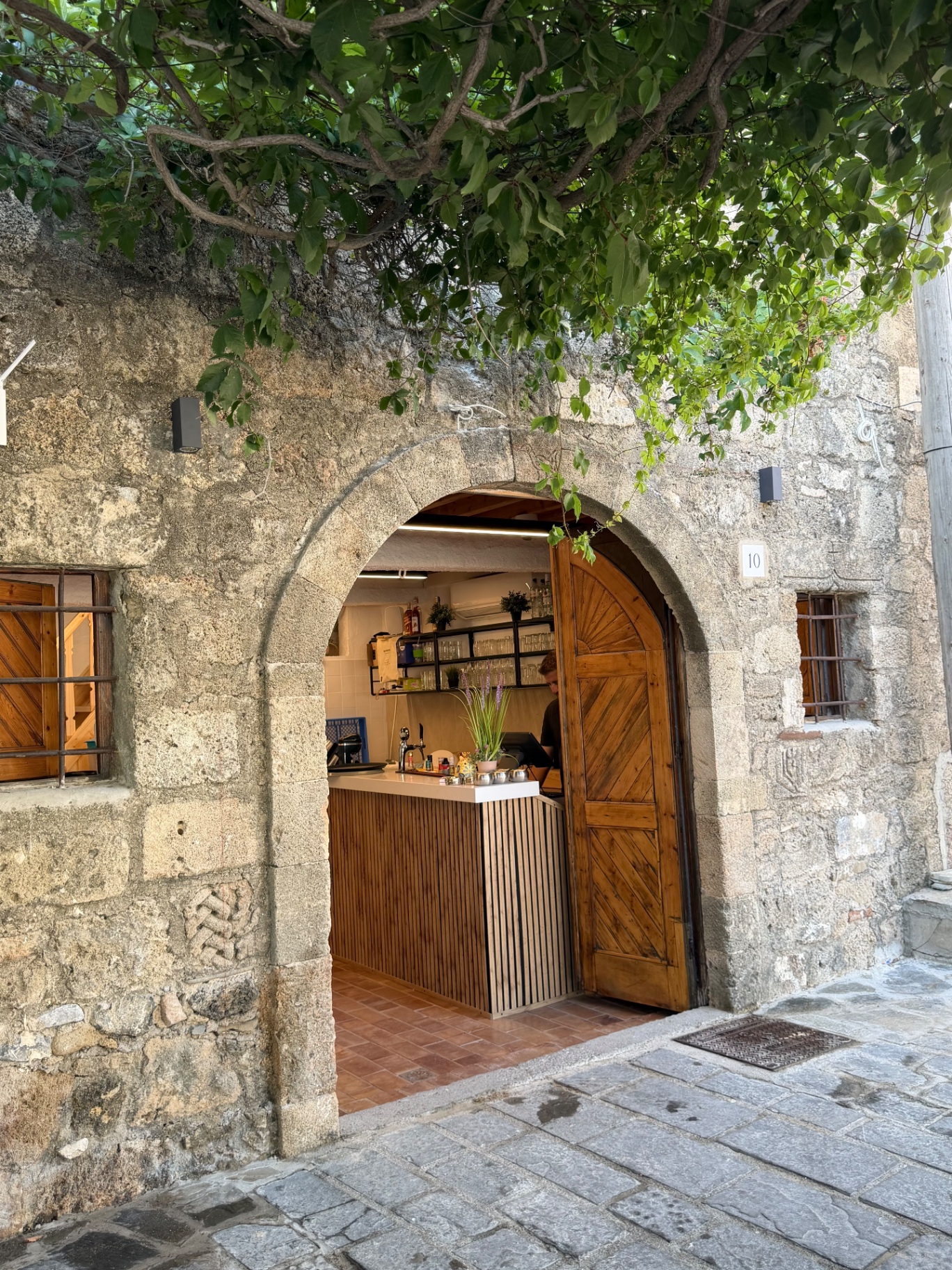
Symbols carved to watch over every visitor for centuries
Hidden in the façade are carvings that have survived wars, earthquakes, changing rulers and centuries of life by the sea.
The Boathouse is more than an old stone building. Whether carved by the original builders or carefully preserved from even older structures, its symbols tell the story of a time when a façade was expected to do more than close off a room.
Carvings like these were meant to offer protection to the people who lived, worked and passed through the building.
Protection in the medieval Mediterranean
Throughout the Byzantine world and later under the Knights of St. John, protective symbols were commonly carved into churches, homes, warehouses and city gates.
People believed that certain symbols could invoke divine protection, ward off misfortune and keep the evil eye away from people, families and valuable possessions.
On Rhodes — standing at the crossroads of Europe, Asia and the Middle East — these traditions blended together. Greek, Byzantine, Crusader and local traditions all left their mark on the island's architecture.
The Boathouse still carries traces of that tradition.
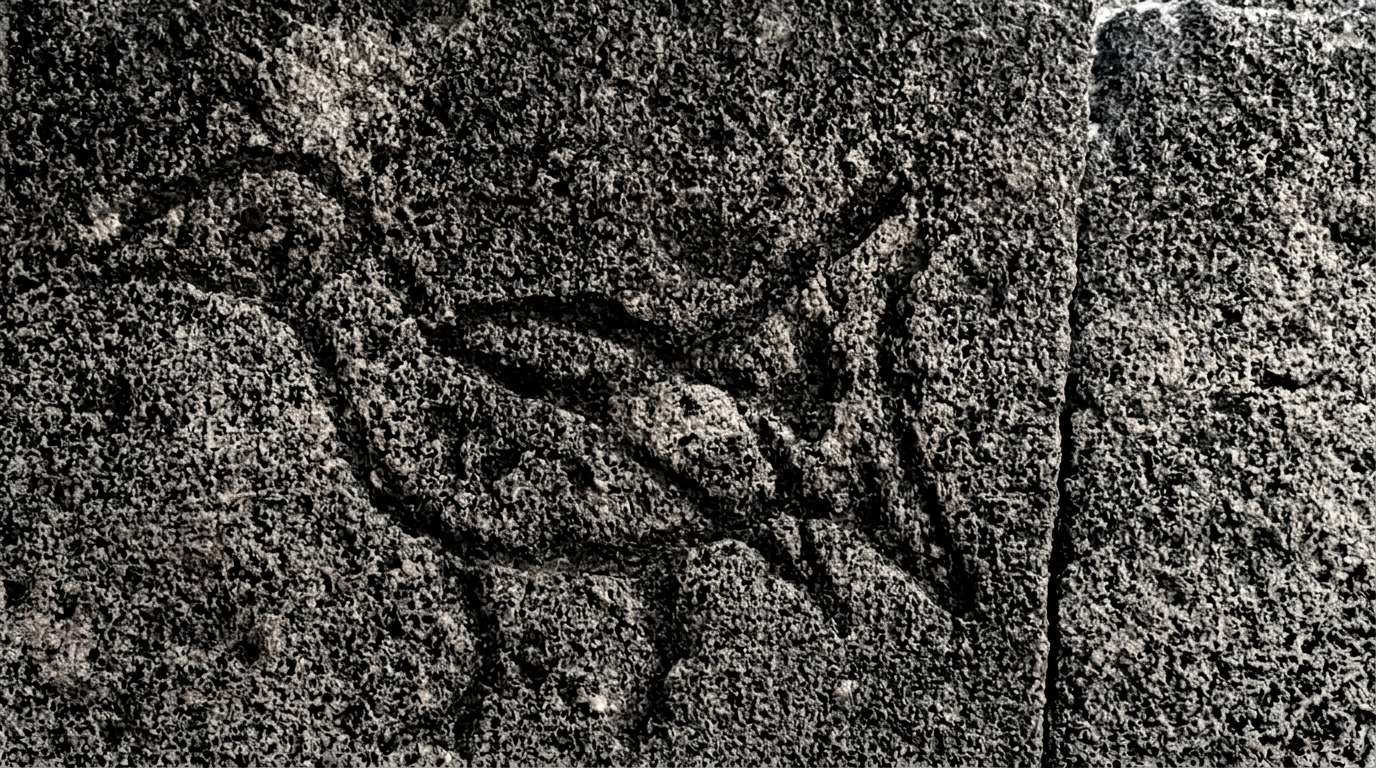
The bird
The bird occupies the most important position in the entire façade: the keystone above the main entrance. This was never an accidental location.
Throughout Byzantine architecture the centre of an arch often carried the building's most meaningful symbol. It represented protection over everyone entering and leaving the building.
The carving resembles a stylised dove or seabird. For Christians, the dove symbolised the Holy Spirit, peace and divine protection.
For sailors, birds meant something equally important. A seabird often meant land was close and that a voyage was coming safely to an end.
Standing between sea and village, the bird became an appropriate guardian for a building connected to maritime life.
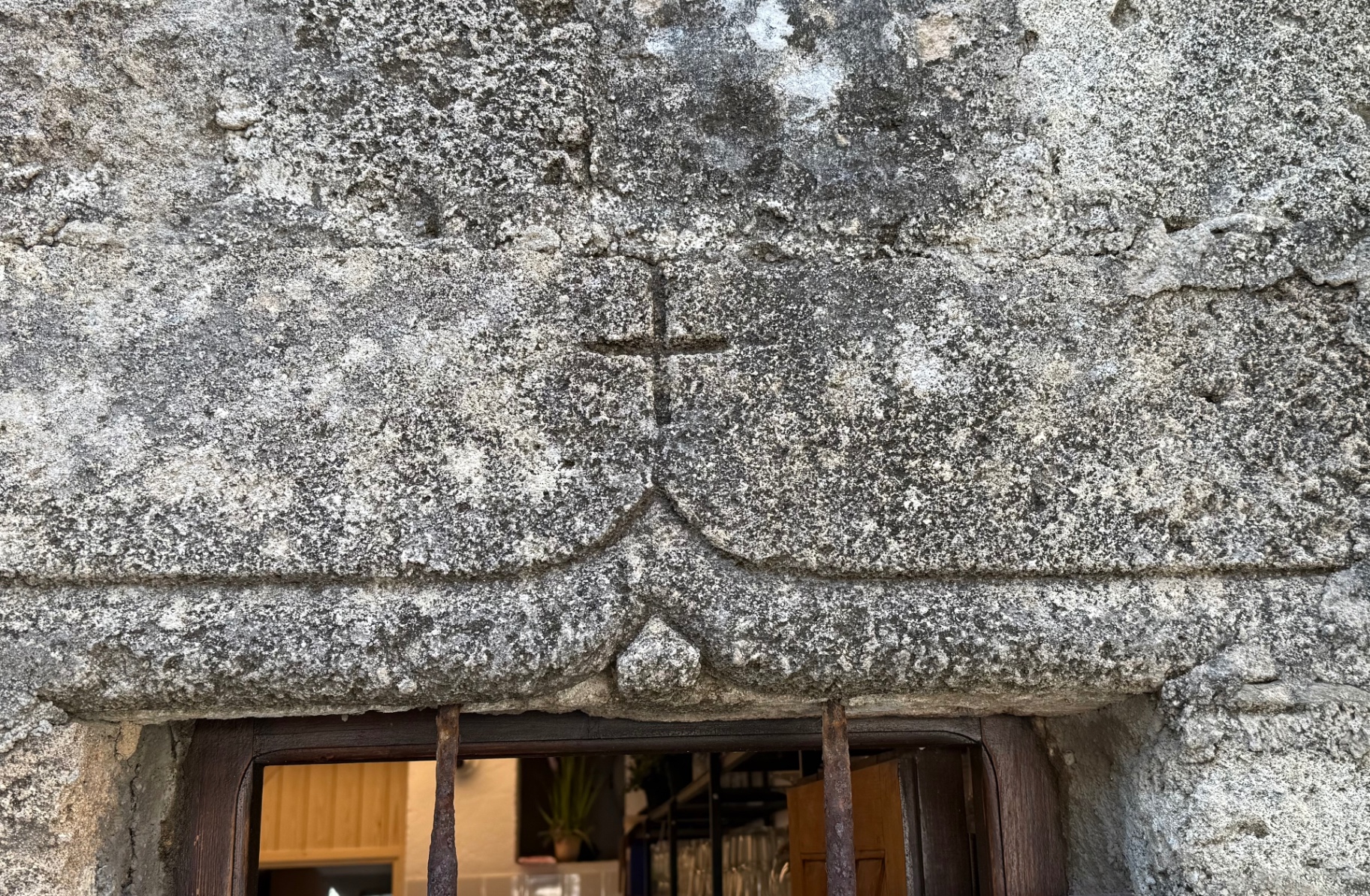
The cross
Above the right-hand window is a simple carved cross. Simple crosses like this appear throughout medieval Rhodes.
Rather than being decorative, they were often carved directly into stone to dedicate a building to God's protection. Warehouses, workshops and homes frequently carried these small crosses.
To medieval builders, faith formed part of everyday life. Protection was sought not only through strong walls and iron bars, but also through symbols believed to watch over the building.
Two stones, two different histories
On either side of the entrance sit two finely carved stones. They are not symbols placed by the builders of the Boathouse — they are older fragments, taken from earlier structures and set back into the wall. This practice, known as spolia, was common across Rhodes for more than a thousand years, and each of these stones carries its own past.
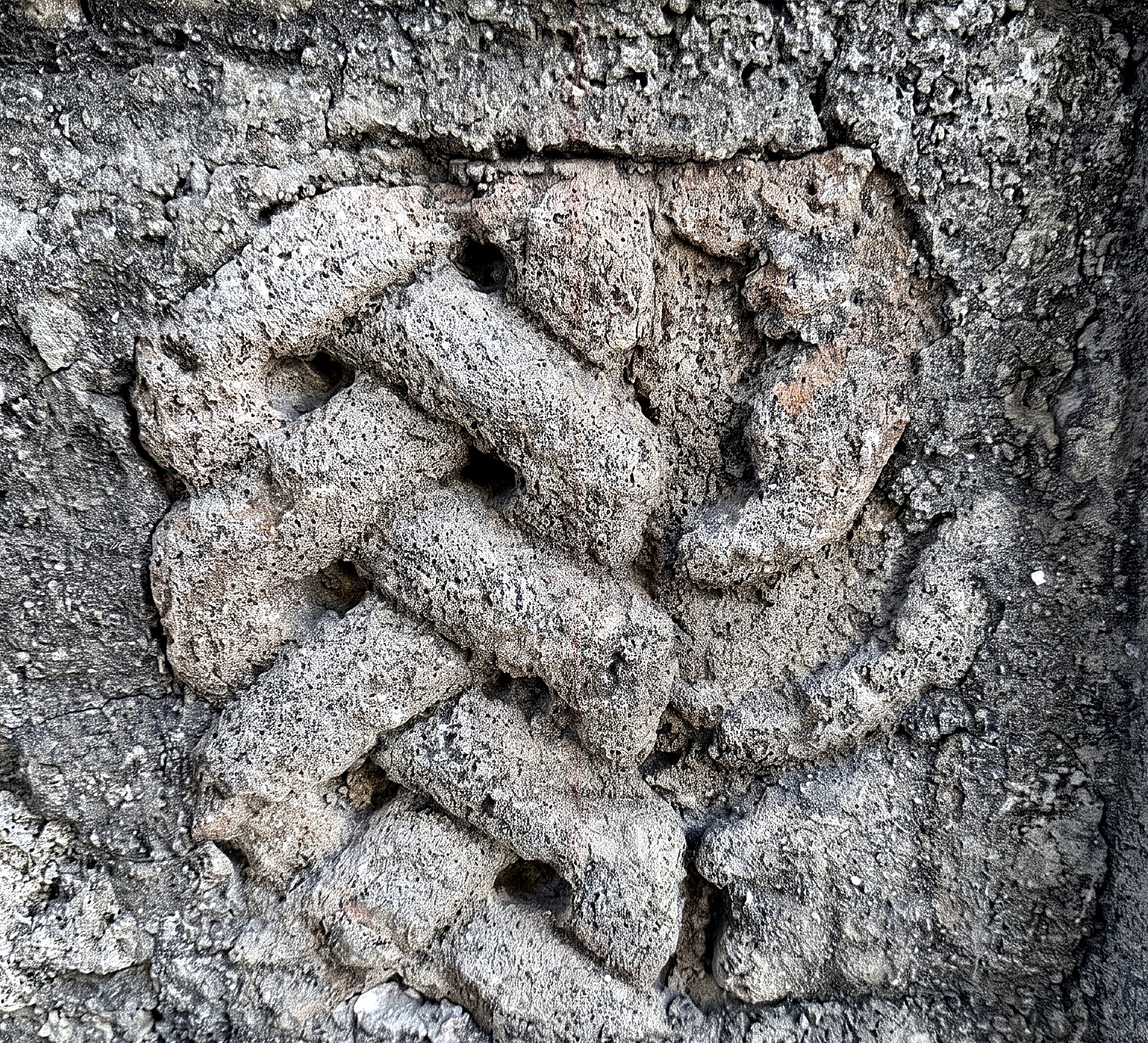
The interlace knot
Deeply carved bands weave over and under each other in an endless braid. This is a classic Byzantine interlace, the same visual language used on chancel screens, ambo panels and doorframes across the Aegean between roughly the 6th and 11th centuries — from Constantinople and Thessaloniki down to the smallest island churches.
Rhodes was full of such churches. Many were destroyed by earthquakes, Arab raids in the 7th and 8th centuries, or later dismantled when the Knights of St. John rebuilt the island after 1309. Their carved fragments rarely disappeared — masons picked them up and set them back into new walls, gates and houses.
This stone is almost certainly one of those survivors: cut for a Byzantine building that no longer exists, and reused here, at the entrance of a warehouse on the Skala, long after its original church was gone.
A woven pattern with no beginning and no end — traditionally read as a sign of eternity, and as a knot that binds and wards off evil.
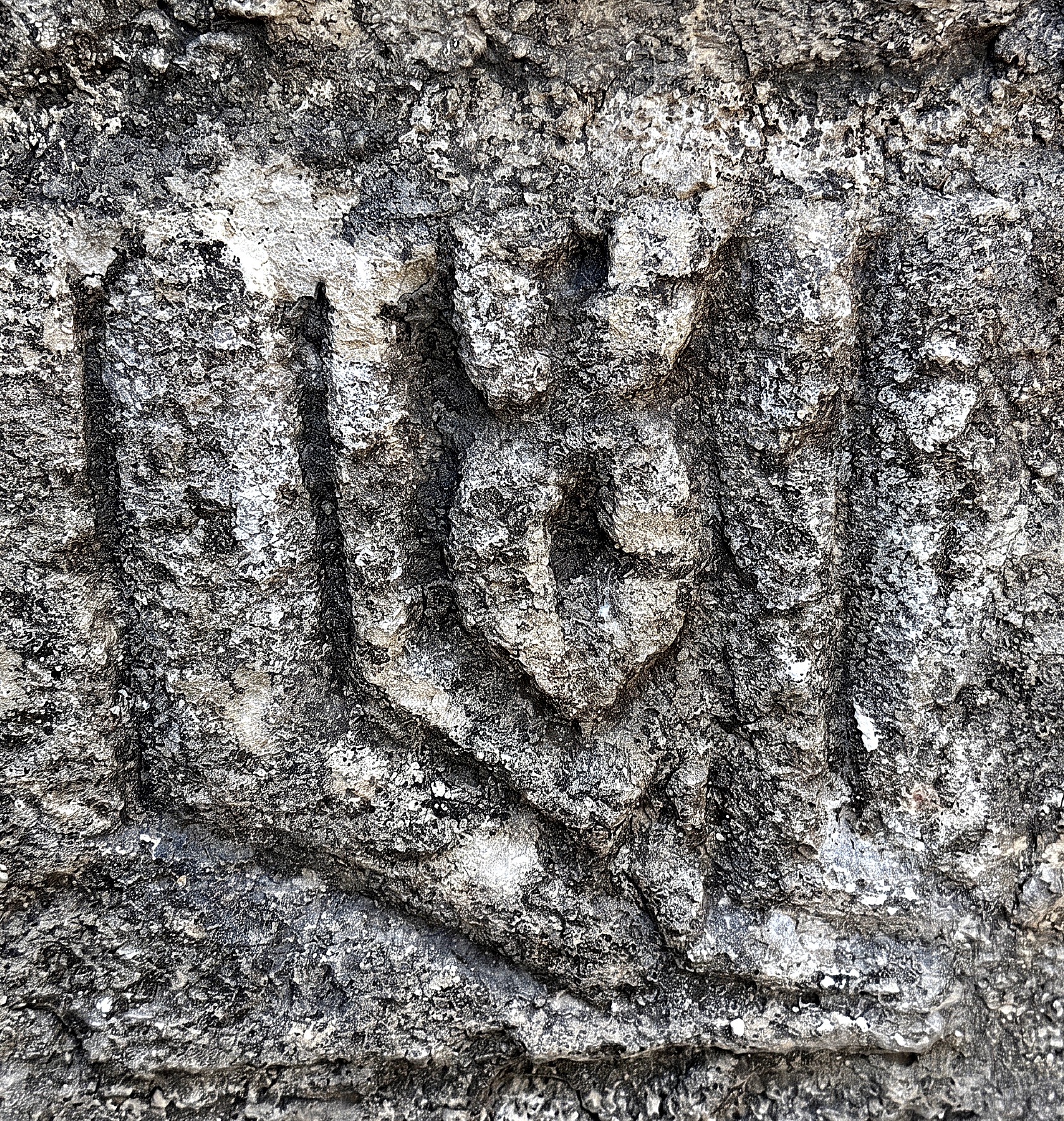
The carved relief
The stone on the right is worked in a completely different hand. Instead of a woven geometric pattern, its surface carries a raised figurative relief — the kind of carving used on medieval emblems, heraldic panels and tomb slabs rather than on church furniture.
That points to a much later world than its neighbour. From 1309 onwards the Knights of St. John covered Rhodes with carved coats of arms: over gates, above doorways, on auberges and private houses. Lindos, as a fortified outpost of the Knights, received its share. When those buildings were later altered or fell into ruin, their carved panels became prized reused pieces.
Whether this fragment came from a Knights-era doorway, a merchant's house in the Skala, or an even older secular building, one thing is clear: it was not a leftover. Someone chose a finished, worked stone and set it deliberately at this entrance.
Two stones from two different worlds — one Byzantine and sacred, one medieval and worldly — framing the same doorway for centuries.
Goods arriving by sea were wealth.
Today we see a restaurant. Centuries ago this building likely protected something far more valuable than tables and coffee.
Olive oil. Wine. Grain. Fishing equipment. Imported products. These were the livelihood of families and merchants.
A warehouse therefore needed more than thick walls. It needed every form of protection available: strong masonry, iron bars, elevated construction above the beach — and symbols believed to watch over what was stored inside.
But the symbols were not only meant for the goods. They also spoke to the people arriving from the sea. To a sailor stepping onto the sand, or a merchant looking up from the beach, the bird and the cross above the door were an immediately readable message: this is a safe place, watched over — you may come ashore in peace.
Carved for the people, not for the walls
The symbols on this façade were never decoration, and they were never really about the building. In the medieval Mediterranean they were carved for the people — to watch over those living and working inside, to greet those arriving from the sea, and to send everyone crossing the threshold back on their way safely.
A quiet feeling of safety
The cross and the bird were carved to look after everyone under this roof — inhabitants, merchants, sailors, and today every guest sitting inside these walls. The stones you sit between were made with the people in mind, not the mortar.
A welcome carved in stone
To a sailor stepping onto the sand, the symbols above the door were a readable message: this is a safe place, watched over. They were meant for the visitor, not the wall — a wordless greeting to anyone who had crossed the sea to get here.
A safe arrival and a safe return
The bird sits directly above the main arch — the threshold between the sea and the safety of the land. Symbols placed above a doorway were a wish for every visitor passing through: a safe arrival, and a safe return home.
Together, the bird and the cross form a quiet welcome over every visitor:
- the bird watches over the people arriving from the sea and setting off again;
- the cross places everyone stepping through the doorway under a quiet protection;
- together they were made for the people who share a table beneath them, far more than for the stones themselves.
For as long as anyone can remember, every visitor to this building has been quietly watched over by its stones. When you sit here, share a meal or raise a glass, that same welcome is meant for you.
Come once — leave with the welcome of the stones.
In old Lindos, the bird above the door, the cross above the window and the carved stones on either side were believed to place everyone who crossed the threshold under the same quiet protection as the building itself.
We like to think that tradition is still alive. Anyone who walks in for a coffee, a plate of food or a glass at sunset carries a small piece of that quiet welcome with them when they leave — a Lindos souvenir that isn't sold in any shop.
Make the Boathouse one of the stops on your Lindos list. Once you've been, the stones have already watched over you.
Bringing the story back to life
The symbols are not museum pieces. They still look out over the same bay they have watched for centuries.
Today they no longer guard merchants or cargo. Instead, they welcome visitors from around the world who come to enjoy the same place where sailors, traders and fishermen once arrived after crossing the Aegean Sea.
Have you seen the carvings in the building?
Most guests walk past without noticing. Once you know where to look, the façade tells its own story.
Inside the story
- Why this building stands where it does
- Byzantine stones reused by the Knights of St. John
- From fishermen's boathouse to today's restaurant